New - 17 Hours Ago


$149,000
Active
2
Beds
1
Baths
949
Sqft
--
Acres
6208 Robinson St #1, Overland Park, KS 66202
MLS#: HMS2620967


Key Takeaways:
Buy function, not flash. Laundry, parking, storage, and move-in-ready condition rent faster than fancy finishes.
Rent is set by comps, not averages. Match property type, beds, baths, condition, parking, and laundry, then price to win.
Underwrite for reality, not hope. Add vacancy and repair reserves, stress-test the deal, and choose the simplest property that stays rented.
Most investors do the same thing at first.
They walk a property, fall in love with the countertops, and assume renters will feel the same.
Here is the pattern interrupt: renters do not rent countertops. Renters rent convenience, comfort, and a “this will be easy to live in” feeling that hits within the first 30 seconds.
If you are shopping for an investment property in Overland Park, KS, your best advantage is simple. Buy what renters repeatedly say yes to, and avoid the stuff that looks nice but causes vacancy, maintenance calls, or pricing pressure.
Let’s make it practical.
Renters are not complicated, but they are specific. They want the basics handled, and they want the home to feel cared for.
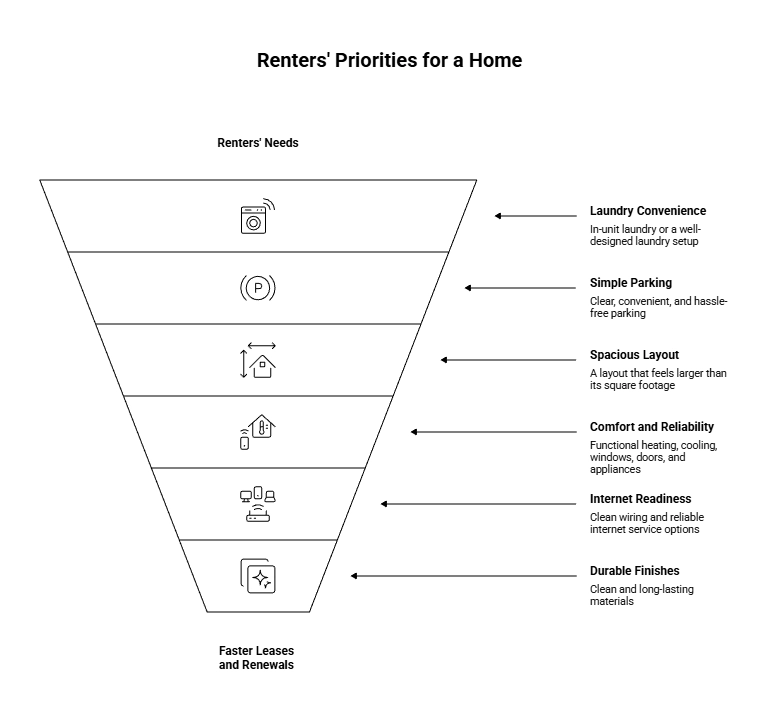
Here are the consistent “yes” factors that drive faster leases and steadier renewals:
In-unit laundry or strong laundry setup (hookups that make sense, not an afterthought)
Parking that is simple (clear, convenient, and not a daily headache)
A layout that lives bigger than the square footage (good flow, useful storage, natural light)
Comfort and reliability (heating, cooling, windows, doors, appliances that work the first time)
Internet-ready (clean wiring, easy router placement, reliable service options)
Clean, durable finishes (renters respect “new,” but they love “durable”)
Renters pay for functionality. The easiest home to live in usually rents first.


This is where most investors get tripped up. They use an average number, then wonder why their listing sits.
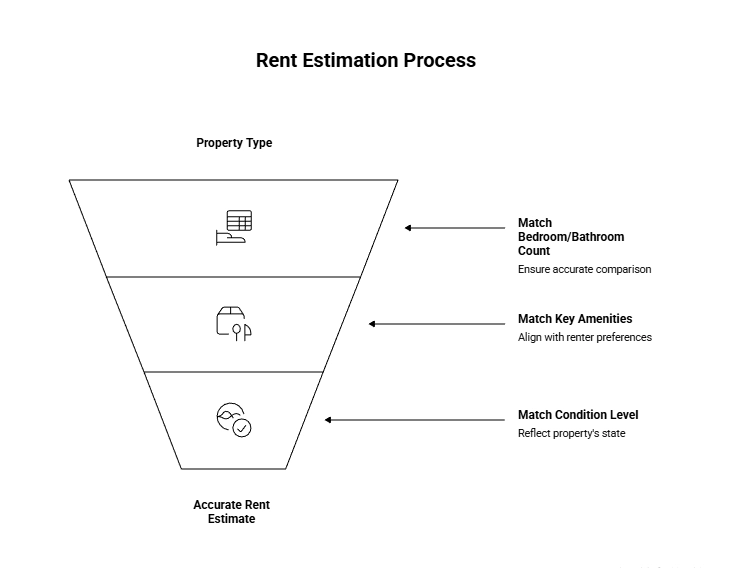
Rent is set by comps, and comps are driven by property type, bed and bath count, parking, laundry, condition, and location within Overland Park.
Use this framework to estimate rent accurately:
Start with your property type (single-family, townhome, condo).
Match bedroom and bathroom count (do not compare a 2 bed to a 3 bed and call it “close enough”).
Match key amenities (laundry, parking, outdoor space).
Match condition level (updated and maintained vs. dated).
Adjust only after those match.
The best rent estimate is not a citywide average. It is a tight set of real comps that match how a renter shops.
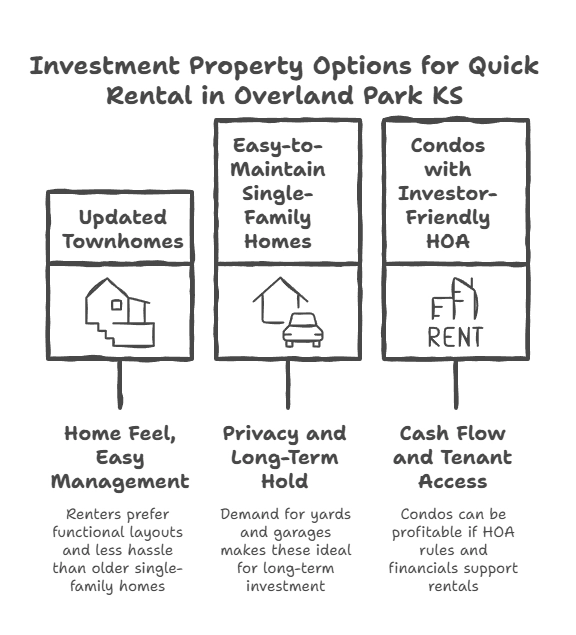
If your goal is strong demand and easier management, focus on properties that align with how renters actually live.
Why these work:
Renters like the “home feel” with less hassle than many older single-family properties.
Layouts tend to be functional.
Parking is often clearer than dense condo setups.
What to prioritize:
Convenient laundry setup
Storage and closets
Obvious parking
Durable flooring
Why these work:
Strong renter demand for a yard, a garage, and more privacy.
Often the best lane for long-term hold strategies.
What to prioritize:
2-car garage or solid off-street parking
Simple yard maintenance, not a “weekend job”
HVAC, roof, windows, and mechanicals in good shape
A kitchen that functions well, even if it is not luxury
Condos can work if:
Rental rules are clear and investor-friendly
HOA financials are stable
Dues do not crush cash flow
Parking and access feel easy for tenants
The best buy is the one that fits renter demand and reduces surprises for you.
If you want fewer vacancy days, you need fewer objections.
These are the upgrades and features that renters notice immediately:
In-unit laundry
Parking clarity
Bright, clean, move-in-ready condition
Durable flooring (low scratch, easy clean)
Modern lighting and hardware (inexpensive, high visual impact)
Bathrooms that feel clean and maintained (fresh caulk, good ventilation, updated fixtures)
What to avoid paying extra for:
Ultra-trendy finishes that wear poorly
Fancy materials that require constant upkeep
“Pretty” updates that do not fix functional issues
Spend on durability and function first. Then spend on visual polish.
Do not overthink it. A renter usually chooses based on daily convenience.
Strong rental demand tends to follow:
Commute routes and access to major roads
Proximity to shopping, dining, and parks
Locations where errands are simple
Areas with a steady supply of renters who want to stay for more than one year
Pick areas that support easy routines. Easy routines create longer tenancies.
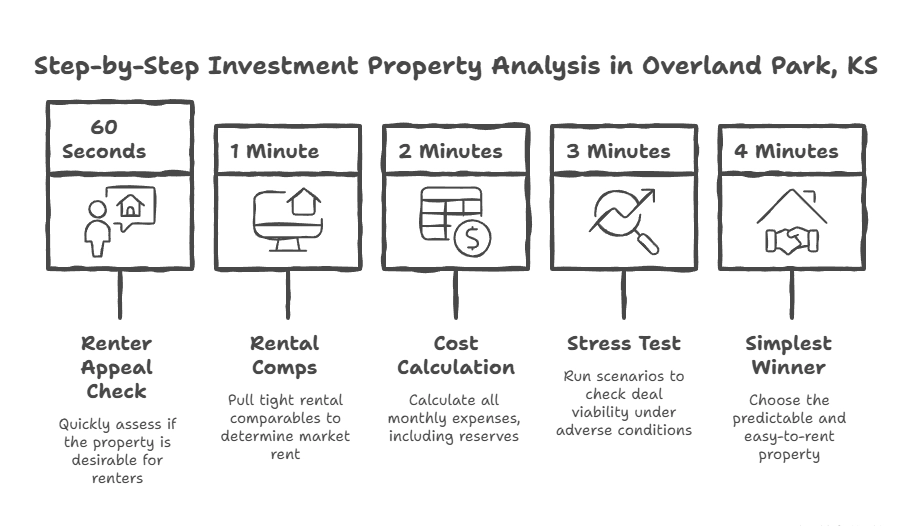
Here is a clean underwriting process that keeps emotion out of it.
Ask: If I were renting, would this feel easy to live in?
Match property type, beds, baths, condition, parking, laundry.
Include:
Principal and interest
Taxes and insurance
HOA (if any)
Property management (even if you self-manage, value your time)
Maintenance reserve
Vacancy reserve
CapEx reserve for big-ticket items
Run a scenario where:
You have a longer vacancy period
You replace one major system sooner than expected
If the deal breaks, it was not a deal.
The best investment is often the one that is boring, predictable, and easy to rent.
Predictable cash flow is created before you close, not after you list it.
Old belief: “If I love the home, renters will love it.”
New reality: “If renters love the function, they will choose it fast.”
When you buy what renters want, you control vacancy. When you control vacancy, you protect your returns. And when your property is easy to live in, tenants stay longer.
That is the dream. A rental that performs without constant stress.
Overland Park real estate continues to attract investors because of the city’s strong job market, steady population growth, and proximity to Kansas City, which together support demand for rental properties and buying a home in Overland Park. Market dynamics include competitive market pricing, long-term appreciation potential, and rental investment opportunities in Overland Park that offer rental income and rental yields above many suburban alternatives. Investors also value excellent schools and low vacancy rates, which help maintain higher rental rates and consistent cash flow.
The real estate market and rental market in Overland Park have seen steady growth in rental rates driven by strong demand for rental properties, an improving local economy, and inflow of young professionals. These market trends can boost rental income and cash flow for investors, but competitive market conditions and periodic shifts in the housing market mean investors should monitor average rent, vacancy rates, and local market indicators to make informed decisions and protect rental yields.
Single-family homes and well-located townhouses frequently perform well because families and professionals prioritize excellent schools and proximity to job centers. Small multifamily units and updated single-family rental properties aimed at renters and buyers seeking quality and convenience also see strong demand. Real estate investors should consider properties near high-performing school districts and commercial corridors to maximize rental income and reduce vacancy rates.
The median home price affects acquisition costs, financing, and expected returns; higher median home prices can reduce initial cash-on-cash returns but may indicate stronger long-term appreciation. Investors comparing median home price in Overland Park to broader Kansas real estate or the Kansas City metro should weigh purchase price against potential rental income, maintenance costs, and the city’s long-term growth prospects to find opportunities for positive cash flow and capital appreciation.
Important indicators include vacancy rates, rental rates, job market growth, population growth, school districts quality, and new construction activity. Monitoring real estate market reports for Overland Park, changes in the housing market, and local employment trends helps investors identify when to buy and which neighborhoods offer the best rental investment opportunities in Overland Park.
Excellent schools and neighborhood amenities are major drivers of demand for family-oriented rental properties and can sustain higher rental rates and lower turnover. Overland Park’s reputable school districts and proximity to parks, shopping, and transit options make properties in those areas particularly attractive to renters, improving long-term occupancy and rental yields for investors focused on stable cash flow.
Yes. A knowledgeable realtor or real estate professional familiar with the Overland Park real estate market can help identify investment opportunities, assess market trends, analyze rental income projections, and negotiate purchases. Real estate agents who specialize in rental property investment can also advise on local market dynamics, tenant demand, and property management options to optimize returns.
Risks include rising home prices making entry more expensive, shifts in the housing market that affect vacancy and rental rates, changes in local employment or population trends, and potential regulatory changes affecting landlords. Conducting due diligence on neighborhood-level demand, estimating realistic rental income, and planning for maintenance, vacancies, and market downturns will help mitigate these risks and identify sustainable investment opportunities in Overland Park.
Key Takeaways:You can tour 15 homes in Overland Park and still feel unsure.Not because Overland Park is confusing, but because most people shop it the hard way. They search a giant map, chase a few pretty photos, and hope the “right area” magically reveals itself.Here is the truth most buyers discover later: Overland Park is easiest to shop when you pick your commute corridor first, then match ho
Key Takeaways:Start with payment clarity, not house tours. Get pre-approved, confirm your monthly comfort zone (with taxes and insurance), then shop with confidence.Budget for three buckets upfront. Down payment + closing costs + a cash cushion. Know your numbers before you fall in love with a home.Tour like an owner, not a browser. Focus on big-ticket items (roof, HVAC, foundation, systems) and
Key Takeaways:Pick space that fixes your daily pain.More square footage is useless if the layout still bottlenecks your kitchen, storage, or work-from-home setup.Choose an area that matches your weekly routine.Commute, errands, and weekend habits decide the “right” Overland Park pocket, not hype or zip codes.Tour with a function-first checklist.Flow, storage, major systems, and flexible rooms mat
Key Takeaways:Low-maintenance means fewer surprises. Prioritize newer roof, HVAC, windows, water heater, plus durable exterior materials so repairs do not hijack your weekends.HOA coverage is the make-or-break factor. Do not assume. Confirm what the dues include line-by-line, check reserve funds, and ask about special assessments from the last 3 to 5 years.The “easy” home is built around your rou


.png)